
About the author:
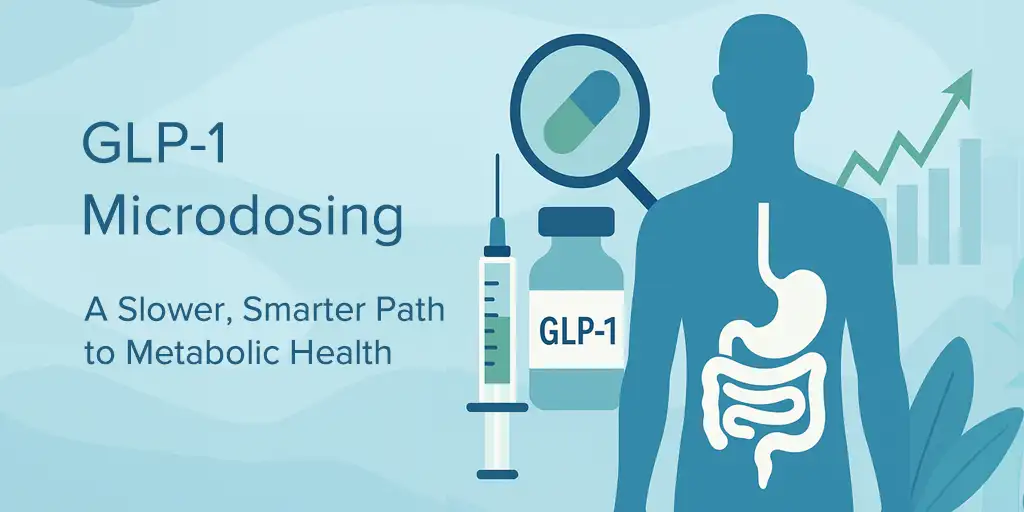
The landscape of weight loss and metabolic health optimization is evolving rapidly, and one of the most significant developments has been the widespread adoption of GLP-1 medications like Ozempic® and Wegovy®. As a functional medicine physician, I’ve witnessed firsthand how these medications are transforming our approach to diabetes, obesity, and cardiometabolic health. However, there’s a growing trend that’s capturing attention both in clinical practice and popular culture: GLP-1 microdosing.
What Is GLP-1 Microdosing?
GLP-1 microdosing involves taking a fraction of the standard prescribed dose of GLP-1 medications like Ozempic, Wegovy, or Mounjaro. Rather than following traditional dosing protocols, patients and physicians are exploring whether smaller amounts can still provide meaningful benefits while minimizing potential side effects.
This approach represents a fundamental shift from the conventional “more is better” mentality in medicine. Instead, GLP-1 microdosing embraces the principle of finding the minimum effective dose that achieves desired health outcomes.
The Science Behind GLP-1 Medications
Before diving into microdosing, it’s essential to understand how GLP-1 medications work. These drugs mimic the action of glucagon-like peptide-1, a hormone naturally produced in our intestines. GLP-1 medications offer multiple benefits beyond weight loss:
- Enhanced insulin sensitivity
- Reduced inflammation throughout the body
- Improved blood sugar regulation
- Slowed gastric emptying, promoting satiety
- Potential cardiovascular protection
Research over the past two years has revealed that GLP-1s are powerful tools for comprehensive metabolic health, not just weight management.
Who Might Benefit from GLP-1 Microdosing?
In my functional medicine practice, I’ve identified several patient populations who may benefit from a microdosing approach:
Individuals Seeking Modest Weight Loss
Not everyone needs to lose 50 pounds. For patients looking to shed 10-20 pounds or fine-tune their body composition, microdosing may provide sufficient metabolic support without the intensity of full-dose protocols.
Highly Sensitive Patients
Some individuals experience significant side effects even at standard starting doses. GLP-1 microdosing allows these patients to access the metabolic benefits while minimizing gastrointestinal discomfort, fatigue, or other adverse reactions.
Weight Maintenance Support
Patients who have achieved their weight loss goals may benefit from micro-doses to maintain their progress and continue receiving the anti-inflammatory benefits of GLP-1 medications.
Preventive Health Optimization
From a functional medicine perspective, early intervention with low-dose GLP-1s may help prevent the cascade of chronic conditions that stem from metabolic dysfunction.
The Functional Medicine Approach to GLP-1 Microdosing
As a practitioner of functional medicine, I focus on addressing root causes and optimizing overall health rather than simply treating symptoms. GLP-1 microdosing aligns with this philosophy by:
Shifting from Reactive to Proactive Care
Instead of waiting for full-blown diabetes or obesity to develop, microdosing allows us to intervene upstream, potentially preventing disease progression before it fully takes hold.
Emphasizing Personalization
Every patient’s metabolic profile, sensitivity levels, and health goals are unique. Microdosing provides the flexibility to tailor treatment to individual needs rather than following a one-size-fits-all approach.
Supporting Holistic Health
Low-dose GLP-1 therapy can complement other functional medicine interventions like nutritional optimization, stress management, and lifestyle modifications.
Important Considerations and Limitations
While the potential benefits of GLP-1 microdosing are promising, it’s crucial to acknowledge the current limitations:
Lack of Clinical Guidelines
Currently, there are no formal clinical guidelines supporting microdosing protocols. The research on subtherapeutic doses is limited, and long-term effects remain unknown.
Unknown Pharmacokinetics
We don’t fully understand how these medications behave in the body at micro-doses, including their absorption, distribution, and elimination patterns.
Need for Medical Supervision
GLP-1 microdosing should never be attempted without proper medical guidance. Working with a qualified physician is essential for determining appropriate dosage, monitoring effectiveness, and ensuring safety.
The Future of Personalized Metabolic Medicine
We’re standing at a pivotal moment in metabolic medicine where personalization, prevention, and patient-centered care are becoming the new standard. GLP-1 microdosing may represent part of this evolution, offering a more nuanced approach to metabolic health optimization.
This shift reflects a broader recognition that health interventions should be tailored to individual needs, genetic predispositions, and lifestyle factors. Rather than applying uniform treatment protocols, we’re moving toward precision medicine that considers each patient’s unique metabolic fingerprint.
Conclusion: A Thoughtful Approach to Innovation
GLP-1 microdosing represents an intriguing development in metabolic medicine, offering the potential for personalized treatment with reduced side effects. However, it must be approached thoughtfully, under proper medical supervision, and with a clear understanding of both the potential benefits and limitations.
As research continues to evolve, we may gain better insights into optimal microdosing protocols and their long-term effects. Until then, patients interested in this approach should work closely with experienced physicians who can carefully assess individual needs and monitor outcomes.
At Legacy Physicians, I believe in empowering patients with knowledge while ensuring their safety through evidence-based, personalized care. If you’re interested in exploring whether GLP-1 therapy—whether traditional dosing or microdosing—might be appropriate for your health goals, I encourage you to schedule a consultation to discuss your options.
The future of metabolic medicine is personalized, preventive, and patient-centered. GLP-1 microdosing may be one tool in our expanding toolkit for optimizing metabolic health, but it requires the guidance of experienced practitioners who understand both its potential and its limitations.
Dr. Corinne Rao is a board-certified internal medicine physician and founder of Legacy Physicians, specializing in functional medicine approaches to weight loss, hormonal health, stress, chronic disease management, and metabolic health optimization. Schedule a consultation with Dr. Corinne at Legacy Physicians.