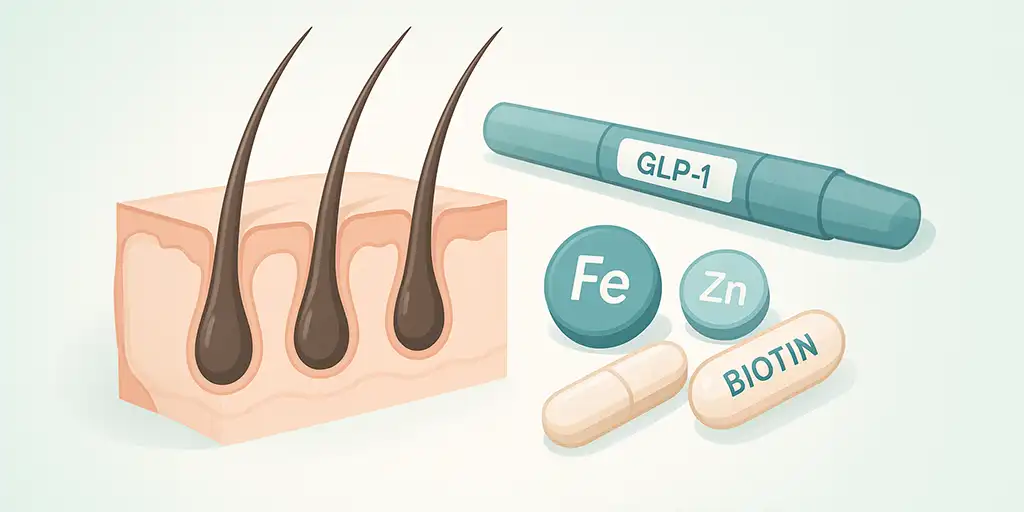
GLP-1 medications like Ozempic, Mounjaro, and Wegovy have transformed weight loss treatment, helping millions achieve results that were previously impossible through diet and exercise alone. But as these medications become more widely prescribed, patients are reporting an unexpected side effect: hair loss. If you’ve noticed increased shedding since starting your GLP-1 treatment, you’re not alone—and more importantly, this is often preventable with the right approach.
Understanding why GLP-1 medications can trigger hair loss is the first step toward protecting your hair while still benefiting from these powerful weight loss tools. The good news? With proper nutritional support and monitoring, most patients can minimize or prevent this side effect entirely.
Why GLP-1 Medications Can Trigger Hair Loss
Hair loss associated with GLP-1 medications is primarily a condition called telogen effluvium—a temporary but distressing form of diffuse hair shedding triggered by metabolic stress. Recent pharmacovigilance research has identified elevated reporting odds ratios for hair loss with semaglutide (2.46) and tirzepatide (1.73), suggesting a real association between these medications and increased shedding.
In clinical trials, hair loss was reported in 3-5% of patients using GLP-1 medications compared to just 1% using placebo. Among those experiencing greater than 20% body weight reduction, the incidence rose to 5.3%—highlighting the connection between rapid weight loss and hair shedding.
The Telogen Effluvium Connection
Your hair grows in cycles. At any given time, about 85-90% of your hair is in the growth phase (anagen), while the remainder is in a resting phase (telogen) before naturally shedding. When your body experiences significant metabolic stress—like rapid weight loss—it can push a larger percentage of hair follicles into the resting phase prematurely.
Three to six months later, these hairs shed simultaneously, causing noticeable thinning. This explains why many patients report hair loss appearing several months after starting their GLP-1 medications, not immediately.
Contributing Factors Beyond Weight Loss
Several factors compound the hair loss risk during GLP-1 treatment:
- Reduced caloric intake – Decreased appetite means fewer nutrients for hair follicle metabolism
- Protein insufficiency – Hair is 95% keratin protein; inadequate intake directly impacts hair structure
- Micronutrient depletion – Iron, zinc, and vitamin D deficiencies are common triggers for telogen effluvium
- Rapid metabolic changes – Quick shifts in body composition create physiological stress
Evidence-Based Prevention Strategies
The most effective approach to preventing GLP-1-related hair loss combines adequate protein intake, targeted nutritional supplementation, and strategic pacing of weight loss. Here’s what the research supports:
Protein Optimization Protocol
Protein requirements increase significantly during weight loss to preserve both muscle mass and hair health. While the standard recommendation is 0.8 grams per kilogram of body weight, patients on GLP-1 medications should aim higher:
- Target intake: 1.2-1.6 grams of protein per kilogram of body weight daily
- Distribution: 25-30 grams per meal, spread across 3-4 meals
- Priority sources: Complete proteins containing all essential amino acids (eggs, fish, poultry, dairy, or combined plant sources)
For a 170-pound (77 kg) patient, this translates to approximately 92-123 grams of protein daily. This intake supports both muscle preservation strategies and hair follicle health.
Key Nutrients for Hair Protection
Research on diet and hair loss identifies several nutrients as particularly important for patients experiencing or at risk for telogen effluvium:
Iron: Essential for hair follicle cell division. Target ferritin levels above 40 ng/mL (some dermatologists recommend 70+ for optimal hair growth). Consider supplementation if levels are low, typically 18-27 mg daily with vitamin C for absorption.
Zinc: Plays a critical role in hair tissue growth and repair. Deficiency is common in calorie-restricted diets. Supplementation of 15-30 mg daily may be beneficial, though excessive zinc can interfere with copper absorption.
Vitamin D: Low vitamin D levels are associated with telogen effluvium and other forms of hair loss. Target serum levels of 40-60 ng/mL. Most patients benefit from 2,000-5,000 IU daily, adjusted based on testing. Learn more about vitamin D optimization.
Vitamin B12: Particularly important for patients with reduced food intake. Deficiency may contribute to hair changes and hair loss. Target levels above 500 pg/mL.
Pacing Your Weight Loss
The degree of hair loss correlates directly with the rate and magnitude of weight loss. Patients losing more than 20% of their body weight experience higher rates of hair shedding than those with more gradual loss.
Strategic approaches include:
- Gradual dose titration – Working with your physician to increase GLP-1 doses slowly
- Target 1-2 pounds per week – Rapid loss increases telogen effluvium risk
- Maintain adequate calories – Very low-calorie diets (under 1,200 calories) significantly increase hair loss risk
Monitoring and Timeline Expectations
Understanding the typical timeline helps set realistic expectations:
- Onset: Hair shedding typically begins 3-6 months after starting GLP-1 treatment or significant weight loss
- Peak shedding: Usually occurs 4-6 months after the triggering event
- Recovery: With proper nutritional support, most patients see improvement within 3-6 months after weight stabilizes
- Full regrowth: Complete recovery typically takes 6-12 months
What to Monitor
Track these metrics to catch deficiencies early:
- CBC (complete blood count)
- Ferritin and iron levels (every 3-6 months)
- Vitamin D (25-hydroxyvitamin D)
- Vitamin B12
- Zinc (if symptoms suggest deficiency)
- Thyroid function (TSH, free T4)
- Daily protein intake (food diary or tracking app)
The Legacy Physicians Approach
At Legacy Physicians, we take a proactive approach to preventing GLP-1-related side effects rather than simply reacting to them. Our comprehensive weight management program includes baseline nutritional assessment before starting GLP-1 therapy, allowing us to identify and correct deficiencies that could contribute to hair loss.
We monitor patients throughout their weight loss journey with regular lab work and nutritional counseling. This approach—addressing the whole person rather than just prescribing medication—reflects our commitment to functional medicine principles and optimized outcomes.
For patients already experiencing hair shedding, we develop personalized supplementation protocols based on individual lab values and dietary patterns, rather than recommending generic one-size-fits-all solutions.
Protecting Your Hair While Achieving Your Weight Loss Goals
Hair loss during GLP-1 treatment is concerning, but it’s usually temporary and often preventable. The key is addressing nutritional needs proactively—ensuring adequate protein, maintaining optimal micronutrient levels, and pacing weight loss appropriately.
If you’re considering GLP-1 medications or currently experiencing hair changes during treatment, a comprehensive evaluation can identify your specific risk factors and create a prevention strategy tailored to your needs. The goal is achieving your weight loss objectives while protecting the aspects of your health—including your hair—that matter to you.
Ready to optimize your GLP-1 treatment with comprehensive nutritional support? Schedule a consultation with Dr. Corinne to discuss a personalized approach to weight loss that addresses the complete picture of your health.
Dr. Corinne Rao is a board-certified internal medicine physician and founder of Legacy Physicians, specializing in functional medicine approaches to weight loss, hormonal health, stress and chronic disease management. Schedule a consultation with Dr. Corinne at Legacy Physicians.